


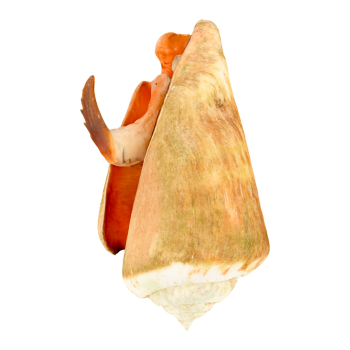
Red-mouthed Phoenix Snail Specimen
The red-mouthed Phoenix snail (Strombus luhuanus) is a tropical marine gastropod mollusk of the genus Phoenix snail in the family Phoenix snail, commonly known in Chinese as the Lu's Phoenix snail or the red-mouthed Phoenix snail. Widely distributed in the Indo-Pacific Ocean, including the South China Sea (Hainan, Taiwan), the Philippines, Indonesia, Malaysia, Australia, the Great Barrier Reef and Pacific Islands (such as Fiji, Solomon Islands), intertidal to shallow waters (0-20 meters), common Sandy or coral sand bottom.
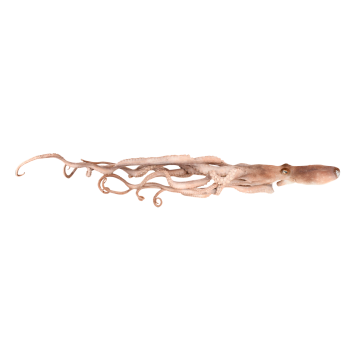
Samoan Octopus Specimen
The Samoan octopus (scientific name: Octopus minorSasaki, 1920) is a shallow marine species with unusually slender brachiopods in the octopidae. It is also called or "Samoan octopus" because its body size is smaller than the octopus (Octopus vulgaris) distributed in the same domain ". It is distributed in the shallow waters of the Northwest Pacific, including Japan (southern Hokkaido to Okinawa), the Korean Peninsula, the East China Sea (along the coasts of Zhejiang and Fujian), Taiwan and the Sea of Japan. Preference is made to rock crevices, sand-mud mixing areas, seaweed beds (e. g. Kumbulin), water depth 0-50 m, water temperature 5-25°C (diving into deep water in winter).

Specimen of the thick-cled live hermit crab
The thick-chelated live hermit crab (DardanusCrassimanus) is the dominant species in the Indian Ocean-Pacific tropical beach and reef junction area (0-10 m water depth), distributed in the western Pacific: Japan (Hokkaido to Okinawa), Korean Peninsula, East China Sea (Zhejiang, Fujian beach), Philippines, Indonesia. Indian Ocean: Gulf of Thailand, Bay of Bengal coast. Diet omnivorous partial rot food, body length (including shell) 5-8cm, body width 3-5cm.

Sallia cono specimen
Conus Sallia (scientific name: Conus lampas sauliae) is a highly toxic marine gastropod mollusk of the conus family Conus. It is classified as a subspecies of the lamp snail, named for its type specimens collected from the Saliya Archipelago in Indonesia. Sallia conus is known for its unique shell shape, bright body color and deadly venom, and is one of the most representative "marine poison kings" in the conus family. It is distributed in the tropical waters of the Indian Ocean-Pacific Ocean, mainly in Indonesia, the Philippines, Malaysia, northern Australia and the west coast of India. Sandy, muddy or coral reef bottoms with a preference for water depths of 1-50 m

Cranus giant specimen
Crocea (Tridacna crocea) is a very distinctive marine shellfish in the bishell class, named after the orange-red markings on the surface of the shells. As a smaller member of the genus, it is still a key species in tropical coral reef ecosystems.

golden cuttlefish specimen
The golden squid is a kind of cephalopod mollusk named because of its golden or orange body color. The scientific name is Sepia esculenta, which belongs to one of the species of economic value in the squid family. Its internal calcareous inner shell, developed water jet propulsion system and unique color change ability. The golden squid is a warm-temperature offshore benthic cephalopod that depends on the complex environment of the shallow sea to complete its life cycle. To be distributed in the Yellow Sea, Bohai Sea, East China Sea (such as Shandong, Liaoning, Fujian coast), as well as Japan's Honda, Kyushu sea. Preference for sandy or muddy seabed with water depth of 20-100 meters (sediment content above 70%).

Skipjack specimen
Bonito (Katsuwonus pelamis) is a large pelagic fish widely distributed in the global tropical-subtropical waters, and belongs to one of the most economically valuable species of tuna. It is named for its dark stripes on the sides of the body ("skipjack" originally means "jumping mackerel") and active cluster habits. Bonito is a typical pelagic migratory fish with a streamlined spindle-shaped body and is adapted to high-speed swimming. The tropical-subtropical waters (40 ° N to 40 ° S) of the three global oceans (Pacific Ocean, Atlantic Ocean, and Indian Ocean) are concentrated on both sides of the equator.

Giant webbed-footed octopus specimen
Giant webbed-footed octopus is a typical cephalopod mollusk. The giant webbed-footed octopus (Callistoctopus macropus) of Octopaceae family has no shell, soft body and highly flexible body. It is a warm benthic cephalopod, widely distributed in tropical-temperate waters of the world, and prefers complex habitat to avoid predators. Mainly preys on crustaceans (crabs, shrimps), mollusks (shellfish, squid) and small fish. It often inhabits coral reef crevices, rock caves, shipwrecks or sandy seabed in shallow seas (water depth 1-100 meters). It is hidden during the day and active at night.

long neck medaka specimen
Long-necked medaka (Vietnamese Giraffe Loach, scientific name: Leptobotia rubripinnis) is a freshwater fish of the genus Cyprinidae (Cyprinidae) Long-necked medaka (Leptobotia) in the order Cyprinidae (Cypriniformes). It is named after its dark markings similar to giraffes on its body. It is a rare freshwater fish that is unique to Southeast Asia (especially Vietnam).

Specimen of Fa
The moa is a bird of the family Ostryiidae. The abdominal feathers are yellow, and the other parts are yellow and black. The body is hypertrophy, the upper limbs are degraded, and the lower limbs are thick and short; the neck is covered with feathers and is short; there are 3 toes. In 1843, Owen named it a terror bird, meaning a large bird that frightens people. In the middle of the 18th century, it was preyed on by European immigrants; by the late 18th century, it was becoming more and more difficult to be caught; 1800 was the last year that people could catch it. The North Island population of New Zealand became extinct in the 17th century and the South Island population became extinct in 1850.

Lipid Carp Specimen
Although its name contains "Malabar", it is actually distributed in the tropical freshwater basin of South America and is an important member of the Amazon River, Orinoco River and other water systems. Malabar carp is a medium-sized freshwater fish of the family Lipid Cyprinidae, named after type specimens found on the coast of Malabar, India (now Kerala, India).

Salmon Specimen
Pacific salmon is one of the most important groups in the family Salmonidae, including 8 species of large migratory fish widely distributed in the North Pacific Ocean. Because of its delicious meat, high economic value and key ecological role, it is called "the silver gold of the Pacific".

Malabar Pomfret Lipid Carp Specimen

Spotfishes Specimen

Vietnamese long neck medaka specimen
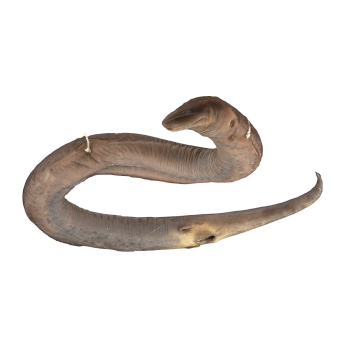
Two-toed Newt Specimen

Pacific Salmon Specimen

pasteurized tongue sole specimen

sulfur cockatoo specimen

striped puffer specimen
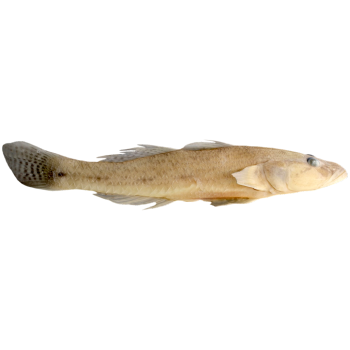
Golden Flat Head Specimen of Goby

yellow-throated hummingbird specimen

Specimen of tree sparrow bunting

Specimen of spotted mullet
Spotted mullet (scientific name: Mugil cephalus) is a broad-salt fish of the genus Mugiidae, named for its obvious spots or stripes on its body side. This species is widely distributed in tropical to temperate waters and estuaries. It is an important economic fish and a typical group for studying the adaptation mechanism of saltine fish. Widely distributed in tropical to temperate waters around the world. Adult fish prefer coastal waters with salinity of 5-35 ‰, and juvenile fish mostly inhabit the semi-salty waters of estuaries or the estuaries of freshwater rivers.

Popular Models
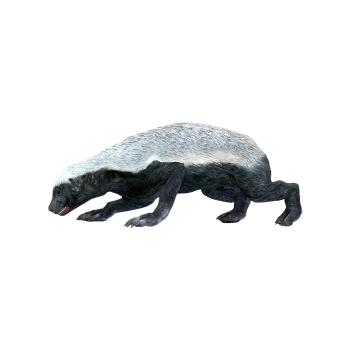
Honey Badger (3D animated model)
192 View
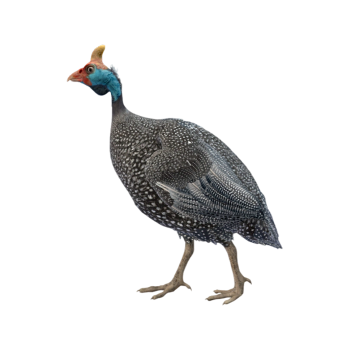
Guinea fowl (3D animated model)
163 View
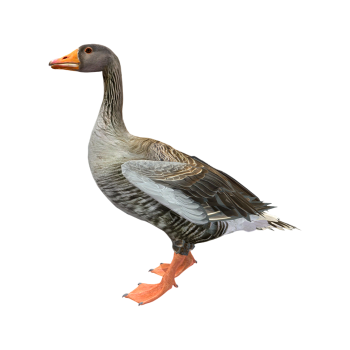
Wild Goose (3D animated model)
185 View
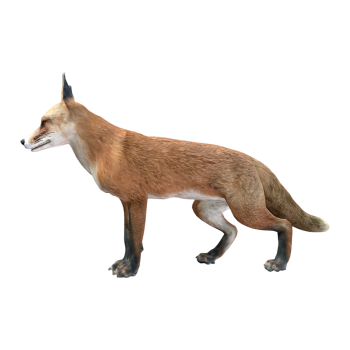
Red Fox (3D animated model)
153 View
Random Model


Small Iron Frame Storage Rack
916 View

Recorder
564 View

tomato
575 View

Bronze decorative axe
961 View


Actinoceras
924 View


humpback
1316 View